Play Tales of Destiny II Online Free for PS1/Playstation.
PS1
1 Player
Where Can you Play Tales of Destiny II Online? Well, all your retro gaming online is playable at RetroPlayers.Club. Relive Tales of Destiny II for Sony PlayStation now. Released on the Sony PlayStation, this retro classic from its publisher is ready the second you press start — no downloads, no setup.
Getting Your Relived Experience Ready
📱 Touch controls appear above — tap the game to start.
🎮 Bluetooth Controller? Click Here
Download our Mini App on PC/Mac for advanced & more premium functions for your games.
⭐ Premium members can click any key below to remap the controls. Go Premium
| Action | Keyboard | Controller |
|---|---|---|
| D-Pad Up | ↑ | D-Pad up |
| D-Pad Down | ↓ | D-Pad down |
| D-Pad Left | ← | D-Pad left |
| D-Pad Right | → | D-Pad right |
| ✕ Cross | X | Bottom face |
| ○ Circle | Z | Right face |
| □ Square | S | Left face |
| △ Triangle | A | Top face |
| L1 | Q | Left shoulder |
| R1 | E | Right shoulder |
| L2 | Tab | Left trigger |
| R2 | R | Right trigger |
| Start | Enter | Start |
| Select | V | Select |
| Left Stick Up | T | Analog up |
| Left Stick Down | G | Analog down |
| Left Stick Left | F | Analog left |
| Left Stick Right | H | Analog right |
| L3 (stick press) | — | Stick press |
| Right Stick Up | I | Right stick |
| Right Stick Down | K | Right stick |
| Right Stick Left | J | Right stick |
| Right Stick Right | L | Right stick |
| R3 (stick press) | — | Stick press |
Report this game not working
HIGH SCORE — THRONE EMPTY
Nobody holds this game yet.
First registered run claims the top spot. It won't stay easy for long.
Playing counts once you're signed in — register free in the player above.
🏆 2026-Q3 TOURNAMENT
Q3 2026 Top Players Championship
Top 3 players on this game share the prize pool — Premium subscribers qualify.
Jul 1 – Sep 30, 2026
Enter with Premium ▶
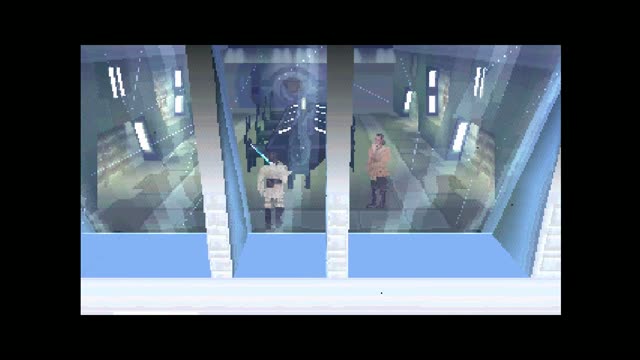

The game's producers gave it the characteristic genre name RPG of Eternity and Bonds . It was developed by members of Telnet Japan's "Wolfteam", who had previously worked on its predecessors Tales of Phantasia and Tales of Destiny.
The Story Behind Tales of Destiny II
GameSpot recommended it only to people who value gameplay over graphics, stating "it's a good bit of fun to play" but it "...would not be out of place on the Super Nintendo about eight years ago" regarding graphics. The Orbus Barrier has shown recent signs of weakening and possible collapse due to the actions of an unknown external force. The game required a computer running Windows 98 Second Edition or higher.
The journey takes Reid across both planets, as he seeks out those responsible for this movement towards the brink of annihilation. The field graphics were cropped, and the battles being redone in full widescreen, and the frame rate was improved in the overworld map. Japanese media cited "a declining number of accounts", but the company Bandai Namco Games did not disclose its reasons to shut down the game.
How Tales of Destiny II Plays
Battles with enemies are done through the Linear Motion Battle System, a hybrid fighting system that combines fighting game and traditional role-playing game elements. The game plays similar to other Tales games, following the precedent set by previous role-playing video games in general as well. Additionally, city merchants will exchange Gald, the in-game currency, for items or equipment that can be vital to completing the game.
Movements and attacks are done in real-time, with the fighting being compared to the Street Fighter series. Progress can be saved at any time - a first for the series, and the player can also learn recipes throughout the game, using them to cook status-enhancing or healing food out of combat. Cities and towns, which are populated with NPCs, are valuable sources of information, for either triggering events that move the plot forward, or extra information that fleshes out the game's story and setting.
Why Players Still Load It Up
In early 2004, Namco announced a port of Tales of Eternia for the PlayStation Portable handheld under the project codename "T.O.E." A playable demo was featured at the 2004 Electronic Entertainment Expo in Los Angeles in June, and later at the 2004 Tokyo Game Show the following September. Its Japanese theme song, "Flying" was performed by J-Rock group Garnet Crow, which was replaced in the English versions by an original orchestral piece. AllGame praised the gameplay, character designs, and 2D graphics, but criticized the game's weaker, less emphasized story, and the voice acting, stating "It isn't that the voice actors do a horrible job, it's just that more often than not, they sound as if they're waiting to get their oil changed instead of on a life-or-death mission."
Namco only published the PSP version of the game in Japan; Ubisoft picked up the game for distribution in Europe, and it went unreleased in North America. The game itself was largely unchanged, although Namco did manage to greatly reduce loading times, eliminating the need for any "now loading" signs altogether. IGN praised the gameplay, citing "a great action-oriented battle system that has no close equivalent in any other game".
Tales of Destiny II — Frequently Asked Questions
Can I play Tales of Destiny II online for free?
Absolutely. The full game loads in the player at the top of this page and runs right in your browser — no installs, no plugins, no waiting.
Do I need a controller to play Tales of Destiny II?
No. Keyboard controls work out of the box (see the controls panel), and any USB or Bluetooth gamepad is detected automatically.
Who developed Tales of Destiny II?
Development was handled by its developer, with its publisher publishing the release.
Where can I buy the original Tales of Destiny II?
See the "Other Places You Can Get This Game" section below the article for legitimate places to buy real-world versions.